
Let me tell you something that you probably already feel in your gut, even if you’ve never put words to it.
Some people don’t just build things. They reshape the world around them — permanently, irreversibly, and in ways that echo long after they’re gone.
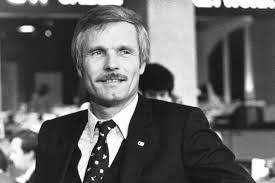
Ted Turner was one of those people.
Ted Turner was an American media giant and entrepreneur who had a net worth of $2.2 billion at the time of his death on May 6, 2026, at the age of 87. But that number — impressive as it is — tells only the smallest fraction of the real story.
This is the full story. And you deserve every single chapter of it.
Who Was Ted Turner? A Life Too Big for Any Single Headline
Before we dig into the dollars, let’s establish who this man actually was — because honestly, most people only know one or two pieces of a much larger puzzle.
Ted Turner was born Robert Edward Turner III on November 19, 1938, in Cincinnati, Ohio. His family later moved to Savannah, Georgia, where his father built a successful billboard advertising company. Turner attended the McCallie School in Chattanooga, Tennessee, and then enrolled at Brown University, where he was captain of the sailing team and vice president of the Brown Debating Union.
He didn’t graduate. He got expelled. And then he went on to build one of the most consequential media empires in American history.
That’s the Ted Turner story right there in miniature — unconventional, audacious, and ultimately victorious.
He was a hard-drinking, cigar-smoking adventurer with deep pockets who once bragged: “If only I had a little humility, I’d be perfect.”
You have to love that. Genuinely.
Ted Turner Net Worth: The Full Financial Picture
Alright — let’s talk money. Because that’s what you came here for, and I’m not going to make you wait any longer.
Ted Turner’s net worth was approximately $2.79 billion in 2025, placing him among the world’s billionaires with a primary fortune built through cable television and media. At the time of his death, that figure stood at $2.2 billion.
But here’s the jaw-dropping context that makes those numbers even more extraordinary.
During a stock market bust following the AOL Time Warner merger, Turner’s net worth went from nearly $10 billion to about $2 billion in just two and a half years. “To put this in perspective, I lost nearly $8 billion in 30 months,” he wrote in his autobiography Call Me Ted in 2008. “That means that, on average, my net worth dropped by about $67 million per week — nearly $10 million per day, every day, for two and a half years.”
He lost $10 million a day for two and a half years — and he was still a billionaire when it was over.
That is not a financial story. That is a force of nature.
The Wealth Breakdown: Where Did Ted Turner’s Money Come From?
Let me walk you through exactly how Ted Turner built his fortune — because the path is as remarkable as the destination.
Turner Outdoor Advertising: The Inheritance He Refused to Sell
In 1963, when Ted was just 24, his father died by suicide after struggling with debt, depression, alcohol abuse, and drug use. Turner ignored advice to sell the company and instead took control of Turner Outdoor Advertising.
That single decision — stubborn, grief-fueled, and widely considered foolish at the time — was the seed of everything that followed.
Turner Broadcasting System: The Superstation That Changed Cable TV
In 1970, Turner purchased a struggling Atlanta UHF television station and transformed it into Turner Broadcasting System (TBS) — one of the first national cable superstations in America. The cable industry boomed in the late 1970s and early 1980s, as nearly a dozen cable networks launched based on the Turner model, including ESPN, MTV, Bravo, Showtime, BET, the Discovery Channel, and the Weather Channel.
His model didn’t just work. It became the template for an entire industry.
CNN: The $1 Idea That Changed the World
This is the one that made him a legend. And the most remarkable part? Nobody believed in it.
In 1980, Turner launched CNN — the world’s first 24-hour cable news network — an idea that was initially mocked by competitors but eventually changed television news forever.
Turner famously stated before CNN debuted: “We won’t be signing off until the world ends.”
Dramatic? Absolutely. Wrong? Not even slightly.
CNN became the gold standard of global news broadcasting and the crown jewel of Turner’s media empire — and it was built on a idea that the entire industry laughed at.
The Content Library: MGM, TNT, Cartoon Network, and TCM
Here’s where the real long-term wealth was built — and it’s a masterclass in understanding the value of intellectual property.
Turner acquired the MGM film library, which helped power TNT, launched in 1988 with Gone With the Wind, and became the foundation for Turner Classic Movies, which launched in 1994. Turner expanded further in animation by acquiring Hanna-Barbera Productions in 1991 for $320 million — a library that included the Flintstones, the Jetsons, Scooby-Doo, and Yogi Bear. In 1992, he launched Cartoon Network.
Think about that portfolio for a second. CNN. TBS. TNT. TCM. Cartoon Network. Hanna-Barbera. MGM films. That’s not a media company. That’s a cultural archive.
The Time Warner Merger: The $7.5 Billion Payday
In 1995, Turner agreed to merge Turner Broadcasting System with Time Warner in a deal that exchanged his company shares for roughly $7.5 billion worth of Time Warner stock. When the merger closed in 1996, Turner became vice chairman of Time Warner and head of its cable networks division — one of the largest individual shareholders in one of the world’s biggest media companies.
Seven and a half billion dollars. For a billboard company’s son from Savannah, Georgia.
Sports Ownership: The Atlanta Empire
You simply cannot talk about Ted Turner’s business empire without talking about sports. Because Turner didn’t just consume sports like a fan — he owned it.
Turner owned the Atlanta Hawks for 19 years and the Atlanta Braves for 20 years, during which time the Braves won the 1995 World Series. He turned the Atlanta Braves into what he ambitiously marketed as “America’s Team” — a bold claim that, for a period in the 1990s, didn’t feel entirely unreasonable.
He also owned World Championship Wrestling (WCW) at its peak popularity, making him a dominant force in sports entertainment at a time when wrestling was culturally massive.
Sports weren’t just a passion for Turner. They were a strategic content play — live sports that filled his cable channels and built his audience long before anyone else fully understood that model.
Ted Turner’s Land Empire: The Billionaire Who Loved Bison More Than Boardrooms
Here’s the part of Ted Turner’s story that genuinely stopped me in my tracks — and I think it’ll hit you the same way.
Turner was the second biggest landowner in North America, with 2 million acres spread over 28 properties, including 19 ranches in Nebraska, Colorado, Kansas, Montana, New Mexico, and South Dakota, as well as in Argentina.
Two million acres. Let that settle.
And he didn’t buy that land to flip it or develop it. He bought it to restore it.
Turner managed to bring bison back from the brink of extinction — he had the world’s largest private bison herd, with approximately 51,000 head. The first of his Ted’s Montana Grill restaurants opened in 2002, and now there are more than 40 locations in 16 states.
As a child, Turner was inspired by a photo of buffalo he saw in a copy of National Geographic, leading to a lifelong mission to restore and preserve wildlife habitat across his vast landholdings. He purchased his first bison in 1976.
A dream he had as a ten-year-old — looking at a magazine photo of a nearly extinct animal — he turned into the largest private bison conservation effort in American history.
That’s not wealth. That’s purpose.
Philanthropy: The Billionaire Who Actually Gave It Away
Let me be direct with you about something.
A lot of billionaires talk about giving back. Ted Turner actually did it — at a scale that very few people in history have matched.
Turner famously gave $1 billion to the United Nations and co-founded the Nuclear Threat Initiative, a nonprofit advocacy organization dedicated to preventing the use of weapons of mass destruction.
Making good on that pledge took longer than he had anticipated — he made his final payment to the UN in 2015 — thanks to the beating his fortune took after the 2001 merger with AOL. When it was over, he was still a billionaire, but just barely. Even as Turner’s fortune shrank, he continued giving money to the UN, calling it the best hope for peace.
He kept giving. Even when keeping the money would have been the rational financial decision.
Additionally, Turner, his family, and biologist Mike Phillips established the Turner Endangered Species Fund and Turner Biodiversity Divisions in 1997. The fund focuses on imperiled species and habitats, with work including black-footed ferrets, Mexican wolves, monarch butterflies, prairie dogs, and wild plains bison.
What You Can Learn From Ted Turner’s Financial Journey
I want to give you something genuinely useful here — not just inspiration, but applicable wisdom from one of the most extraordinary business careers in American history.
Bet on your vision, not other people’s comfort. CNN was laughed at. TBS was dismissed. Turner built them anyway. Your best ideas will often be the ones nobody else believes in yet.
Own the content, not just the distribution. Turner’s real wealth came from owning film libraries, animation studios, and news brands — not just broadcasting them. In the digital age, that principle applies to every creator and entrepreneur alive.
Diversify into what you love. Turner’s land empire wasn’t just a financial play — it was a passion project that also happened to preserve enormous value. When your wealth serves your values, it tends to compound in ways that pure financial engineering never can.
Give while you’re alive to see it matter. Turner’s $1 billion UN pledge, his bison conservation work, his endangered species fund — he did all of it while he was present, engaged, and invested in the outcome.
Survive the losses. Turner lost nearly $8 billion in 30 months and came out the other side still a billionaire and still building. Resilience, not just ambition, is the defining characteristic of generational wealth builders.
Ted Turner’s Legacy: What $2.2 Billion Actually Bought
Let me close with the honest truth about Ted Turner’s net worth — because the number, impressive as it is, barely scratches the surface.
Turner’s career helped transform cable television from a secondary distribution system into a dominant force in global media. CNN changed how the world consumed news. TBS helped prove the national cable model. TNT, Cartoon Network, and TCM showed the power of owning deep content libraries.
Turner’s legacy will always be paired with CNN, and yet the gift he seemed most proud of was the natural habitats he saved by buying and protecting more wild acreage than almost anyone in the U.S. It’s tempting to call him a master of his domain, but he’d prefer caretaker.
A caretaker. Of 2 million acres. Of 51,000 bison. Of a $1 billion commitment to world peace. Of an idea — 24-hour news — that literally changed how humanity understands itself in real time.
Ted Turner’s net worth at death was $2.2 billion. But his worth to the world — measured in the institutions he built, the species he saved, the industry he transformed, and the news infrastructure that still shapes your understanding of global events every single day?
That figure doesn’t have a number.
And honestly? He’d probably love that.
